


Let’s get the obvious out of the way first: we’re Hour-A-Thon. We run a sports fundraising platform that competes directly with Snap! Raise. So you’d be right to read anything we say about them with a raised eyebrow.
Here’s our promise for this article anyway — we’re going to be straight with you, including about the things Snap! Raise does well. If you’re a coach, athletic director, or booster president deciding between platforms, a hype piece doesn’t help you. An honest breakdown does. By the end of this, you should be able to tell which model actually fits your program — even if that turns out to be theirs.
If you’re here because you’re already a Snap! Raise customer searching for Snap! Raise alternatives, you’re not alone, and we’ll explain exactly why coaches make the switch — and when they shouldn’t.
The 30-second version
If you don’t read another word, here’s the honest summary:
-
- Snap! Raise runs a roughly 28-day digital campaign with a dedicated rep, year-round add-on tools, and a long track record. It’s a solid fit for programs that want a managed, multi-week effort and don’t mind a longer timeline.
-
- Hour-A-Thon compresses the whole thing into one live hour of athletes texting and calling their networks, with funds typically paid out in days, not weeks. It’s built for programs that want maximum results in minimum time without a month-long campaign hanging over the season.
Different mechanics, different outcomes. The rest of this article explains why that one structural difference — 28 days versus 1 hour — drives almost everything else.
What Snap! Raise is, and how it works
Credit where it’s due: Snap! Raise built the category. They’ve been at this for over a decade, they work with a huge number of school and youth programs, and they’ve refined a process that a lot of coaches find genuinely easy.
The Snap! Raise model works like this: a coach or organizer sets up a campaign, athletes load contacts, and the platform sends outreach to friends and family by email, text, and social media. Donations come in over the course of the campaign — typically around 28 days — while a dedicated Snap! Raise representative helps guide the effort. There’s no upfront cost; the company takes its cut from the funds raised at the end.
What they do well:
-
- A dedicated rep walks you through setup and execution.
-
- A long, proven track record — they’ve run a lot of campaigns and have the infrastructure to match.
-
- Year-round tools, like team gear stores, that extend fundraising beyond a single campaign.
-
- A clear data-privacy stance — Snap! Raise states it does not sell or share program, participant, or donor data.
If you want a hands-off, multi-week campaign with a guide on call, those are real advantages. We’re not going to pretend otherwise.
What does Snap! Raise actually cost?
This is the question that brings most coaches to a comparison page, so let’s be precise and fair.
Snap! Raise doesn’t publish a fixed public price. The company’s own position is that programs keep “80% or more” of what they raise, which implies a platform fee in the neighborhood of 20%, with better pricing possible for programs running multiple campaigns.
Independent reviews and fundraising-comparison sites, however, frequently report effective rates in the 20–30% range, depending on the agreement. Two details are worth knowing before you sign:
-
- The rate can be tied to participation. Multiple sources describe a structure where, if your program doesn’t hit a participation goal, the fee can increase. Participation is generally calculated as the share of your roster that receives at least one donation.
- The exact terms aren’t disclosed publicly, so the only way to know your real number is to ask your rep directly and get it in writing.
None of that makes Snap! Raise a bad actor — a 20% rate is dramatically better than the 50% a cookie-dough or product fundraiser typically keeps. But “80% or more” and “20–30% depending on terms” are two different sentences, and you deserve to know which one applies to your program before you commit.
What Hour-A-Thon is, and how it works
Hour-A-Thon takes the same basic insight — athletes reaching their own networks raises real money — and compresses it into a single, high-energy hour.
Here’s the mechanic. Your whole team shows up, in person or virtually, for one hour. Each athlete sends a direct text to potential donors, then follows up with a phone call that turns into an immediate donation. A Hour-A-Thon Fundraising Specialist runs the event live alongside your coach, so you’re never doing it alone. The donation link stays open for about a week afterward to catch stragglers, but the heavy lifting happens in that one hour. Funds are typically delivered in days, not weeks.
A few design choices that matter:
-
- No donor-facing goal thermometer. Most platforms show donors a progress bar. Hour-A-Thon deliberately doesn’t, because in our experience, when a donor sees a team has “already hit its goal,” they give less or skip it entirely. Hiding the running total keeps every ask fresh.
-
- No participant logins, photo uploads, or email-list building. The athletes just text and call. That’s the whole job.
-
- It’s an event, not a chore. Coaches consistently tell us the competitive, in-person energy is what makes it work — athletes get off their screens and actually talk to people.
We’ll be honest about our own pricing too: Hour-A-Thon keeps [INSERT HAT FEE] of what your team raises.
Head-to-head: the comparison table
| Hour-A-Thon | Snap! Raise | |
|---|---|---|
| Campaign length | 1 hour (link open ~1 week) | ~28 days |
| How athletes raise | Text + immediate follow-up call | Email, text, social over weeks |
| Who runs it | Fundraising Specialist runs the live event | Dedicated rep guides the campaign |
| Payout speed | Days | After campaign close (weeks) |
| Platform fee | [INSERT HAT FEE] | “80%+ kept” per Snap; 20–30% reported by reviewers |
| Fee tied to participation? | No | Reported yes — can increase if goals are missed |
| Donor goal thermometer | Intentionally hidden | Typically shown |
| Year-round add-ons | Focused on the core event | Gear stores and ongoing tools |
| Best for | Maximum results, minimum time | Hands-off multi-week campaigns |
Where the two models really diverge
Campaign length and athlete fatigue
A 28-day campaign asks your athletes to keep nudging the same friends and family for a month. That works — but it also creates fatigue, both for the athletes and for the donors getting repeated reminders. A one-hour sprint asks for a single, concentrated push. There’s no month-long campaign hanging over practice, no awkward week-three “did you donate yet?” texts. For in-season teams especially, getting it done and over with in 60 minutes is the whole appeal.
What you actually keep
This is simple math. On a $30,000 raise, the difference between keeping 80% and keeping 70% is $3,000 — real money that buys uniforms, covers travel, or enters a tournament. Before you sign with any platform, get your true take-home rate in writing, and confirm whether it can change based on participation. That goes for evaluating us too.
Payout speed
Snap! Raise releases funds after the campaign closes. With a roughly month-long campaign, that means your money can be a month-plus away. Hour-A-Thon’s compressed model means funds typically land in days. If you’re fundraising because you need gear or travel money now, timeline matters as much as percentage.
The donor experience
This is a subtle one that most comparisons miss. Platforms that show a public progress bar are betting that momentum encourages giving. Our research found the opposite for team fundraising — donors who believe the goal is already met tend to give less. Hour-A-Thon’s no-thermometer design keeps each individual ask compelling. It’s a small choice with a measurable effect on per-donor totals.
Where Snap! Raise is the better choice (yes, really)
An honest comparison names the cases where the competitor wins. Snap! Raise is likely the stronger fit if:
-
- You want a truly hands-off, multi-week campaign and prefer a slow build to a single live event.
-
- You value year-round tools like team gear stores as much as the core fundraiser.
-
- Your program can’t get the whole team in one room (or on one video call) at the same time, which is what makes the one-hour model work.
-
- You’ve run with them before, you’re happy, and your effective rate is genuinely at the low end.
If that’s you, stay where you are. We’d rather you pick the right tool than switch and be disappointed.
Where Hour-A-Thon wins
Hour-A-Thon is the better fit if you want:
-
- Speed. One hour of effort, funds in days.
-
- No month-long campaign consuming your athletes’ attention mid-season.
-
- A live, competitive event your team actually enjoys.
-
- Transparent, simple pricing with no participation-goal surprises.
-
- Bigger per-donor results, helped by the no-thermometer design.
See how much your team could raise →
The results behind the model
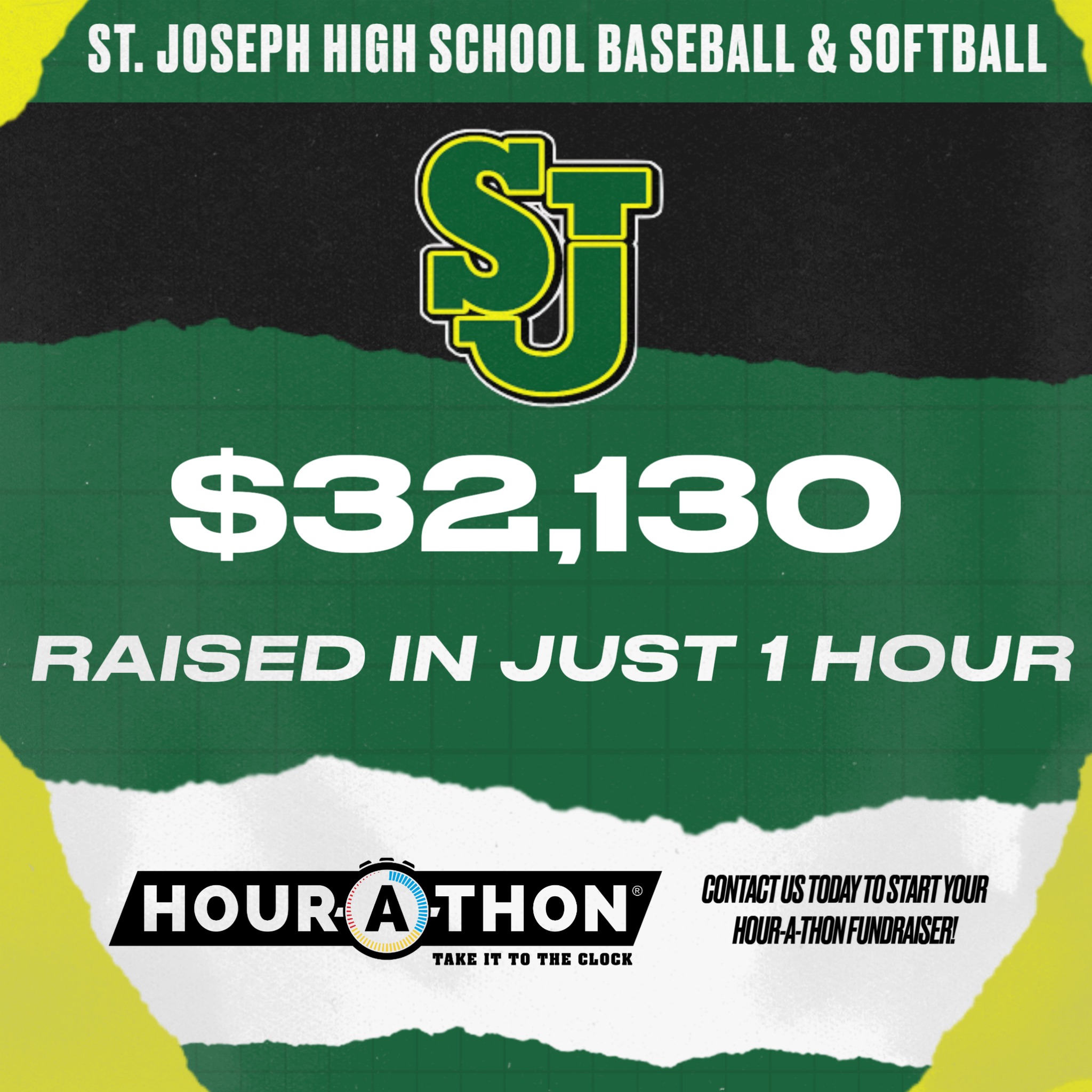
We’re not asking you to take the theory on faith. Here’s what real programs have raised in a single hour:
-
- Pearland HS Football — $71,290 from 1,391 donors
-
- Thomas Downey HS — $168,000 over four years of Hour-A-Thons
-
- Lander University Athletics — $197,198 from 610 student-athletes (about $323 per athlete)
-
- Erskine College Athletics — $123,440 from 1,543 donors
-
- El Toro Football Boosters — over $39,000, “more than all of our combined fundraisers last season”
-
- Florida Kraze Krush Club Soccer — 2,577 donors at a $60 average donation
Different sports, different states, different program sizes — same one-hour model.
How to decide
Strip away the marketing from both sides and it comes down to four questions:
-
- How fast do you need the money? Days (Hour-A-Thon) or after a multi-week campaign (Snap! Raise)?
- Can you get your whole team together for one hour? If yes, the compressed model is hard to beat. If no, the longer campaign may suit you better.
- What’s your real take-home rate? Get it in writing from either platform, and ask whether it can change.
- What experience do you want for your athletes? A single energetic event, or a month-long outreach effort?
There’s no universally right answer — only the right answer for your program.

Frequently asked questions
Is Snap! Raise worth it?
For many programs, yes — it raises far more than traditional product fundraisers and the process is genuinely easy. The most common complaint is the fee: Snap! Raise states programs keep “80% or more,” while independent reviews report effective rates of 20–30% depending on terms. Whether it’s “worth it” depends on your real rate and whether a 28-day campaign fits your season. If the timeline or percentage gives you pause, it’s worth comparing alternatives like Hour-A-Thon.
What percentage does Snap! Raise take?
Snap! Raise doesn’t publish fixed pricing. The company says programs keep 80% or more (implying roughly a 20% fee), but third-party reviews commonly cite effective rates of 20–30%, and several sources describe a structure where the fee can increase if a participation goal isn’t met. Always confirm your exact rate in writing.
What are the best Snap! Raise alternatives in 2026?
Coaches comparing options usually look at Hour-A-Thon, Vertical Raise, and Blast Athletics’ Call-A-Thon, among others. The biggest structural difference is timeline: Hour-A-Thon compresses fundraising into one live hour with fast payouts, while most alternatives run multi-week campaigns. The right alternative depends on how fast you need funds and whether you can rally your team for a single event.
How long does a Snap! Raise campaign take?
Snap! Raise campaigns typically run about 28 days, with funds released after the campaign closes. By comparison, Hour-A-Thon runs in a single hour with payouts usually in days.
How is Hour-A-Thon different from Snap! Raise?
Same core idea — athletes reaching their own networks — executed in opposite ways. Snap! Raise spreads outreach across roughly four weeks; Hour-A-Thon concentrates it into one live, competitive hour with a specialist running the event and funds delivered in days.
Can we switch from Snap! Raise to Hour-A-Thon?
Yes, and many programs do. There’s no long-term lock-in to worry about on our end — you can run a single Hour-A-Thon event to see how it compares to your previous campaign before committing to anything ongoing.
The bottom line
Snap! Raise is a capable platform with a real track record, and for some programs it’s the right call. But if you’re searching for Snap! Raise alternatives, it’s usually because something about the model isn’t fitting — the 28-day timeline, the fee structure, the wait for payout, or campaign fatigue across your roster.
Hour-A-Thon was built to fix exactly those friction points. One hour. Your whole team. Funds in days. Transparent pricing with no participation-goal surprises.
The best way to know which model fits your program is to see your own numbers. Tell us your team size and sport, and we’ll show you what an hour could do.
Reserve your team’s Hour-A-Thon →
Comparing your options? See how much your team can raise, why the one-hour model works, and real results from teams across the country.

Share This Story, Choose Your Platform!

About the Author:
Michael Braunstein
is a fundraising expert and founder of Hour-A-Thon.


